
When Translating the Logo Changes the Game’s Identity
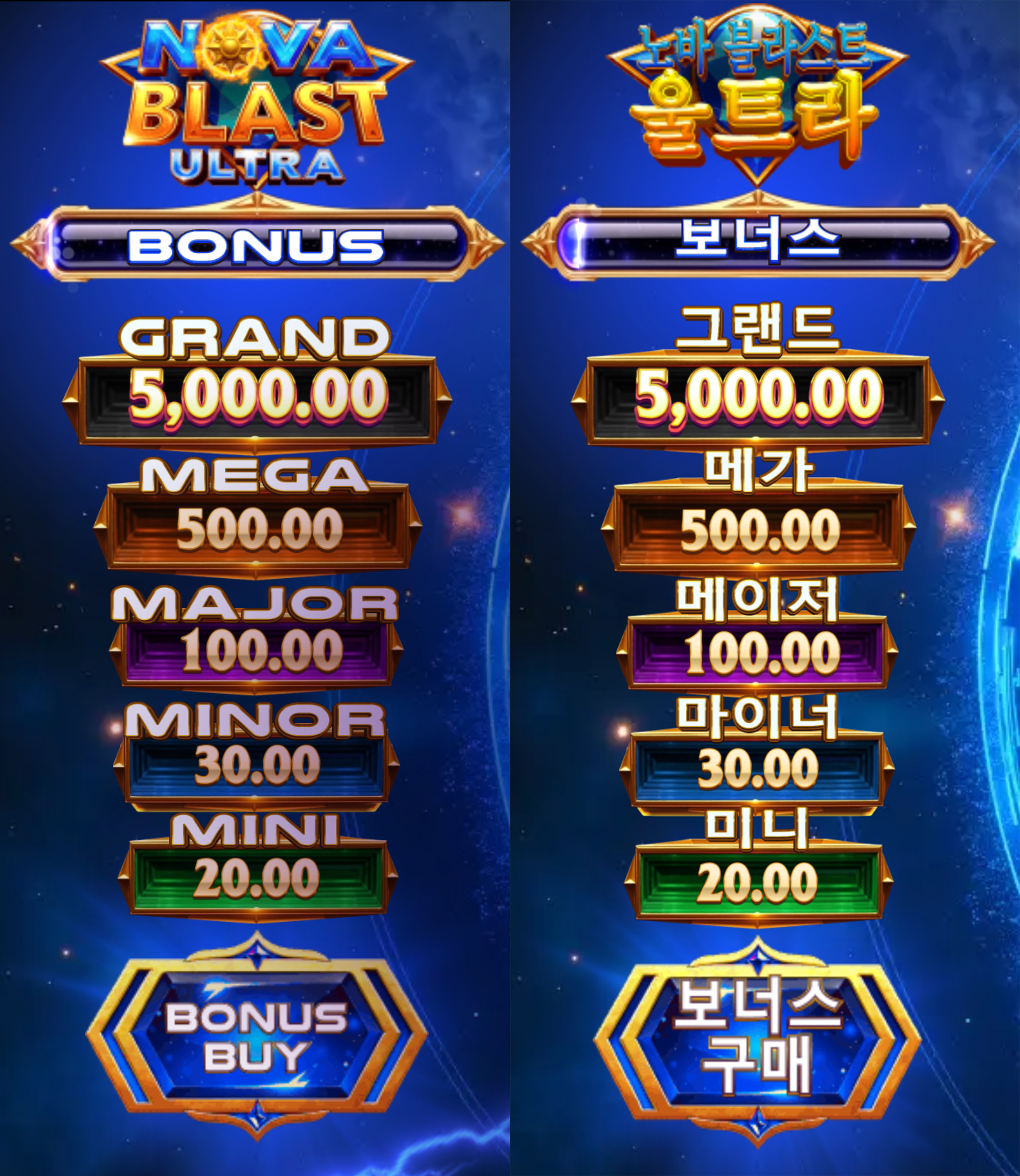
Placed side by side, the original and Korean screens of Nova Blast Ultra show more than a change of words. The game logo and jackpot tier labels have been recreated as Korean artwork. But the new artwork does not preserve the original’s color relationships, decorative details, or typographic impact.
The Issue
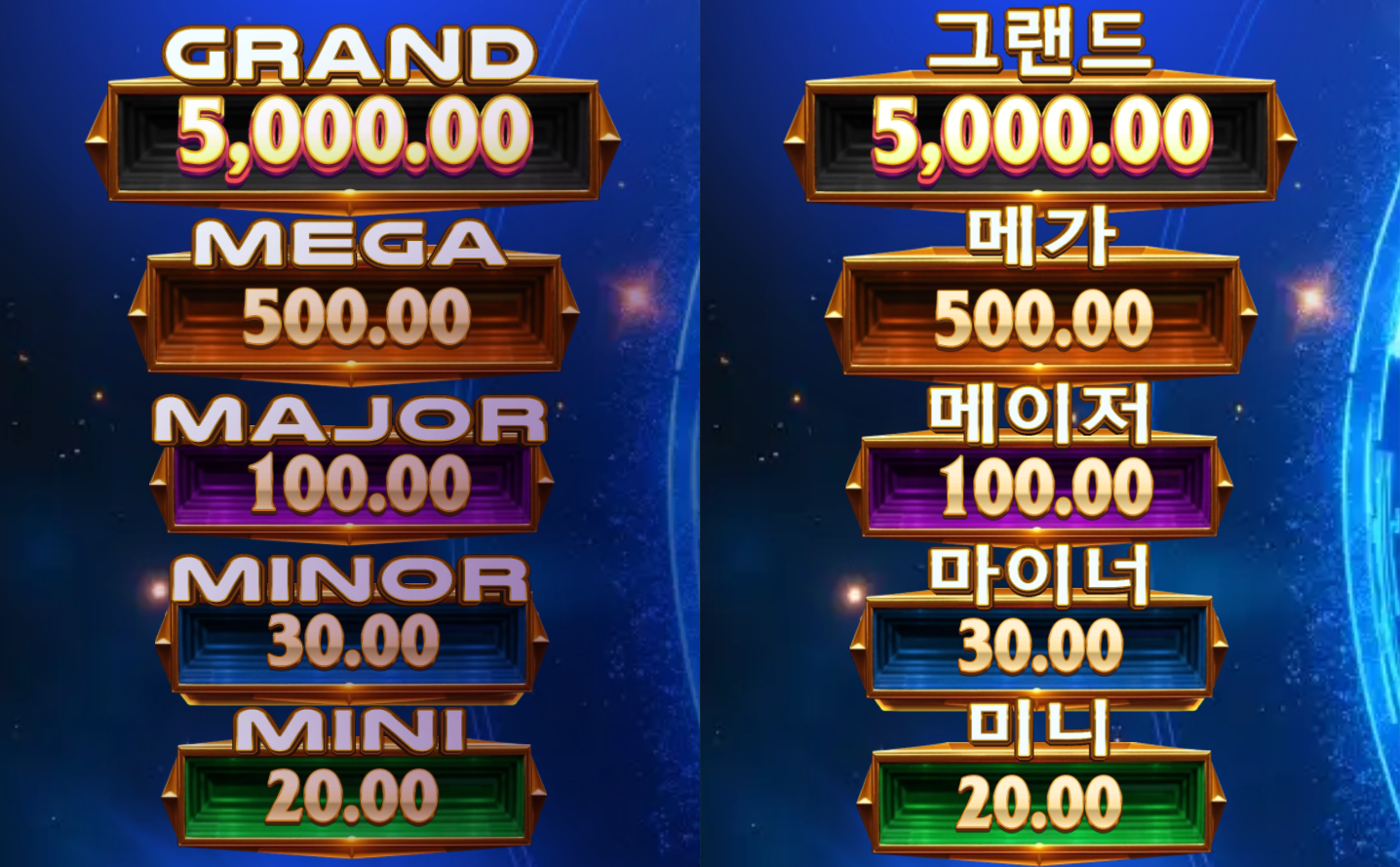
In Nova Blast Ultra by Red Papaya, the title logo has been recreated as “노바 블라스트 울트라,” while jackpot tiers such as GRAND, MEGA, MAJOR, MINOR, and MINI have been transliterated into Korean. The two screens differ in typography, color, and decoration as well as wording. A distinctive detail of the original logo disappears, and the Korean logo feels out of place beside the rest of the game artwork.
Analysis
Recreating a logo or jackpot label as an image asset is different from translating a string. Making the words understandable is only part of the job; the new asset also needs to carry the visual identity established by the original. The two types of artwork on this screen fall short in different ways.
The Logo
A localized logo can create familiarity when executed well, but its main job is to communicate the game’s identity at a glance. Once it is redrawn, players also judge the quality of the new design, not just the meaning of its words.
The original contrasts blue NOVA, orange BLAST, and bright ULTRA, with an ornament inside the O that reinforces its space theme. The Korean logo loses that decorated O and changes the color balance. Its Korean lettering recalls a traditional calligraphic typeface that clashes with the original’s sharp, modern appearance. To a Korean player familiar with the original, it can feel closer to an unofficial imitation than the logo of the same polished game.

Jackpot Labels
Slot players are already familiar with jackpot tiers such as GRAND and MEGA. On this screen, the amounts and their top-to-bottom arrangement also make the hierarchy obvious. Transliteration into Korean adds little information, even though each label has been recreated as an image.
The new Korean lettering is less consistent with the original’s decorative typography. It is less prominent than the title, but its repetition across the tiers continually weakens the screen’s visual finish.
Possible Solutions
If the logo cannot be redesigned to the same standard as the original, keeping the original artwork is the better choice. If it must be localized, its blue and orange color roles, decorated O, dimensional styling, and lettering should guide the art direction from the start. Merely placing Korean words in the same area is not enough.
Artwork such as jackpot tier labels can remain in the original language when slot players already recognize the terms and the amounts and placement make the hierarchy clear. By contrast, text that affects an action or purchase decision should be translated clearly. The decision is which elements benefit from translation and which are better preserved as artwork.
Scope of the Issue
The confirmed case concerns the Korean logo and the jackpot tier artwork used in this slot. The issue is less about a mistranslated word than about a loss of quality and brand identity when the original graphics were recreated for localization.
If logos and tier images for other languages were produced in the same way, similar quality problems are likely to recur across those builds. The review should therefore compare each newly created language asset directly with the original, rather than correcting Korean wording alone.
Potential Risks
The logo is a defining image that communicates the game’s identity at first sight. A poorly localized logo can make even a polished game look like an unofficial imitation. Smaller jackpot labels also shape the overall impression because players see them repeatedly.
Embedding translated text in image assets also raises the cost of corrections. Fixing an unsuitable design or label requires artwork revisions and another check at each display size, rather than a simple string change. Recreating elements that did not need translation increases maintenance work for every language.