
Why Are So Many Slots 5×3?
Slot themes never stand still. One game takes you through an ancient temple, another has you breaking open a piggy bank, and the next sends you into space. Strip away the artwork, though, and a familiar layout remains: five reels across, with three symbols visible on each. The familiar 5×3.
The layout could be wider or smaller, and plenty of slots take those routes. So why does 5×3 remain such a familiar sight? To explore that question, we need to go back to a time when the reels were physical drums.
Three Reels, One Line
Picture a vintage slot machine, and three reels with a single line across their centers probably come to mind. That is the layout we call 3×1 here. It does not mean that each drum has only one symbol printed on it. Even if symbols are visible above and below, the central line is the one used to determine wins.
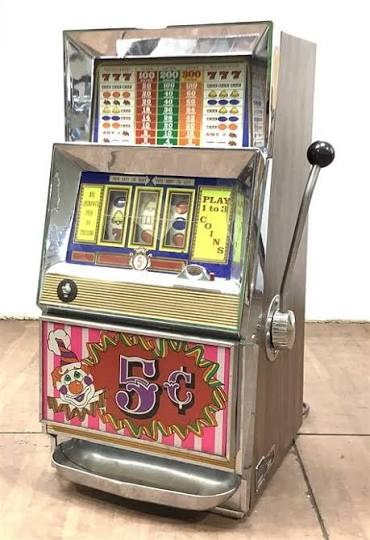
Three reels are not essential for producing random combinations. Two can do that too. But adding a third reel greatly increases the number of possible outcomes within a small machine.
Suppose each reel has 20 equally likely stopping positions and the reels stop independently. Two reels offer 400 combinations of stop positions; three offer 8,000. If a particular symbol appears just once on each reel, the chance of matching it across all reels falls from 1 in 400 to 1 in 8,000.
One more reel of the same size creates far more scope for rare outcomes. That does not mean a two-reel game cannot offer a large payout. Rather, three reels provide a useful way to build rare combinations and corresponding rewards without making each drum larger.
The Space Behind the Display
The vertical ‘1’ is just as interesting as the horizontal ‘3’. Why use only the center line?
On a physical cylindrical reel, the central symbol faces the player, while the symbols above and below tilt away along the curve. For symbols of the same size, that angle changes more sharply on a smaller drum. A larger drum makes the curve gentler and several rows easier to view, but it also makes the machine deeper from front to back.
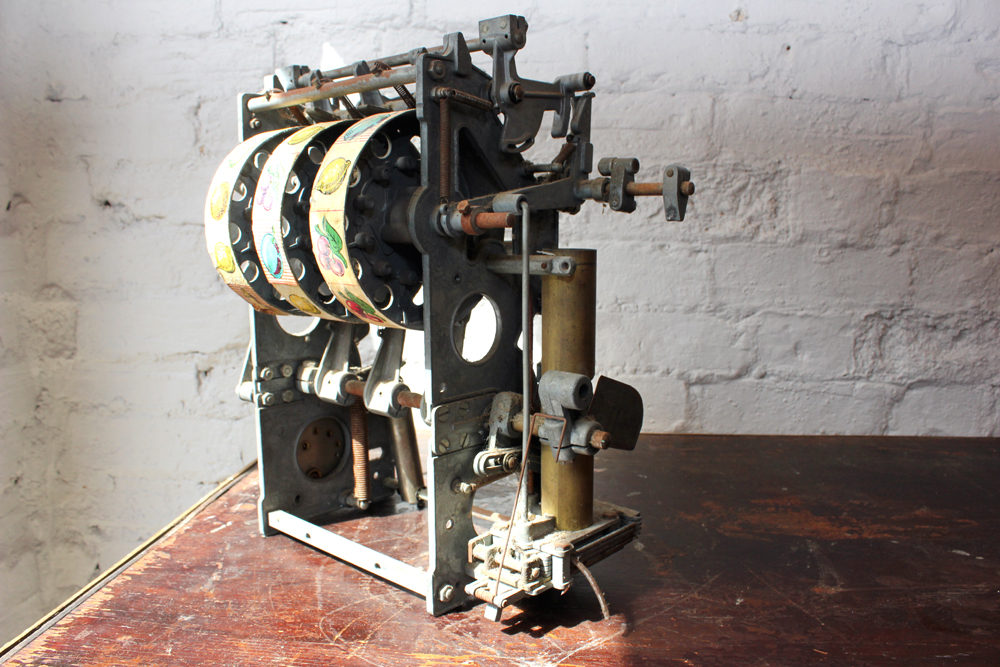
The player sees only part of the drum’s front surface. The venue has to accommodate the whole drum.
Being able to build a bigger TV is not the same as finding a size that fits comfortably in a home. Viewing distance matters, but so do doorways, corridors, and the route used to carry it in. A slot machine placed in a space such as a bar would likewise have needed room for both the machine and its player.
A belt running around several rollers could replace the drum and create a flat viewing surface. But that would introduce more things to manage, including tension, sideways drift, and precise stopping positions. There is value in the simplicity of a drum rotating around a single axis.
The machinery inside also matters. A reel is more than a cylinder that spins. Multiple parts work together to control its speed and stopping timing. Other mechanisms must detect wins and dispense payouts. Offering more ways to win would therefore have meant considering the machinery needed to support them.[1]
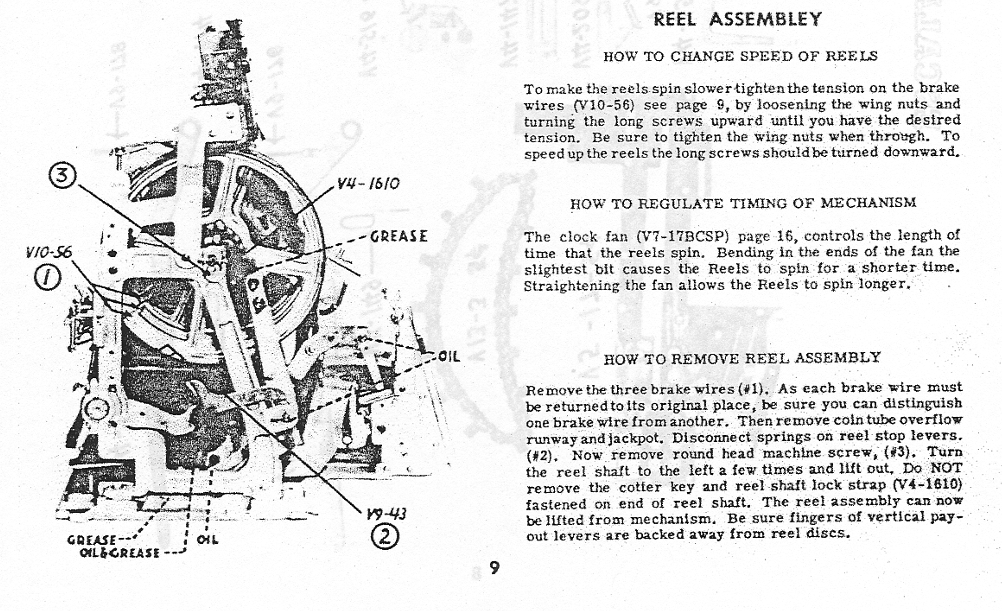
Three reels and one central line may have offered a balance: a variety of outcomes without excessive mechanical complexity, poor symbol visibility, or an oversized footprint.
Five Reels, Three Rows of Symbols
Slots did not stop at three reels. In its official history, Aristocrat lists the creation of the first five-reel slot machine among its achievements of the 1960s and 1970s.[2]
Five reels broaden the ways rewards can be structured. A win might begin with three matching symbols, then pay more when a fourth and fifth join them. Even after the third reel completes a win, there is still a reason to watch the remaining reels.
Showing three symbols on each of five reels creates a top, middle, and bottom row. These positions can form not only a straight center line but also V, inverted V, W, and M patterns. Five reels with three visible rows make a compact layout that accommodates varied paylines while keeping individual symbols easy to read.
Example paylines connect one symbol on each reel.
Why not add one more row and make it 5×4?
If the aim is to offer varied paylines, three rows already provide plenty of possibilities. They also make it easy to arrange paths symmetrically around the middle row. Four rows can certainly produce clear patterns, but more paths do not necessarily make a display easier to read.
Physical reels introduce another cost. In a simplified model that keeps symbol size and the visible angle of the drum unchanged, showing four symbols instead of three requires a drum about one-third larger in diameter. Adding a row to the window changes the space needed behind it too.
Using the fourth row for wins also changes the payout design. Once a reel stops, the symbols above and below are determined by its strip, so this does not require a separate random draw. What changes is which combinations count as wins and how much they pay. If more combinations qualify, symbol arrangements and the paytable need to be considered together. On a mechanical machine, the mechanisms that detect and pay those wins matter too.
If three rows already offered enough variety, a fourth might not have justified the added demands. Seen this way, 5×3 is less a layout designed to fit in as much as possible than one that fits the essentials neatly.
Adding Depth with Scatters and Free Spins
Video slots did more than expand the display. Scatters offered the prospect of rewards or bonuses without lining up on a fixed payline. Free spins provided a set number of spins without an additional stake, during which rules involving multipliers or wilds could change.
The familiar 5×3 layout could remain, while the experience inside it changed dramatically.
The Value of Familiarity
Video slots do not need larger physical drums. Changing the number of reels or visible symbols does not require more room for cylinders. So why do so many slots still use 5×3, even without those constraints?
Choosing a new slot does not necessarily mean wanting a new way to play.
Someone who enjoys classic slots may welcome fresh artwork and atmosphere while wanting the underlying structure to stay familiar. Exploring the new winning possibilities of a different layout may have little to do with what that player enjoys about slots.
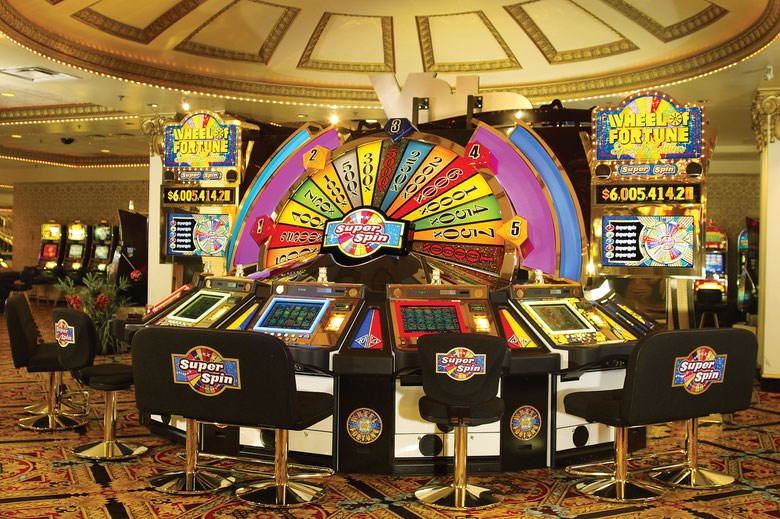
With a layout you have seen for years, even the anticipation and disappointment as the symbols stop are familiar. In a game played for money, that familiarity can offer a comfortable starting point.
Of course, two 5×3 games can still have different winning rules. What matters here is the experience created by a familiar layout together with a classic way of awarding wins. Players seeking that experience have little reason to want the basic structure reinvented.
Providers add new themes and features to a familiar framework, and players find a recognizable experience in a new game. This suggests a form of path dependence: familiarity helps reproduce familiarity. A layout that may once have been a practical compromise becomes something people prefer in its own right.
With Six or More Reels, Winning Rules Change Too
How do slots with wider layouts use that extra space?
Among the slots with six or more reels in our database, excluding changeable and irregular layouts, around 6.8% were registered as conventional payline games.[3] Expanding the layout has not simply meant drawing more lines.
Of these 584 slots, 40 use conventional paylines: approximately 6.8%.
Based on database entries as of September 26, 2026. The 39 entries without a registered payout type are shown separately. One suspected erroneous 99×99 entry was excluded.
Ways stood out among 6×4 games. Symbols combine across the reels without following fixed lines, but the underlying idea of consecutive matches across reels remains. In that sense, it can be seen as an extension of familiar reel-based combinations.
Anywhere stood out in 6×5 games, and Cluster in 7×7 games. The former uses the number of a given symbol appearing across the display; the latter uses groups of adjacent symbols. The whole grid, or connections across an area, matters more than placement along a particular line.
A larger display can be used in different ways: more combinations across reels, counts of scattered symbols, or groups of neighboring symbols. It expands not only the number of positions, but also the ways those positions can contribute to a win.
Smaller Layouts and Different Shapes
Some slots go the other way and choose a smaller layout, such as 3×3. Fewer positions make the result easy to read at a glance. Combined with frequent small wins, that can create a lighter experience. A small grid does not guarantee a high hit rate, but it can provide a setting for simpler play.
Unusual shapes raise other questions. Sweet Candy Cash Stash uses a 4×5 layout. Playing it, the tall display felt like a choice made with mobile use in mind. The 5×1 layout of Got Milk? retains five reels but shows only one row, recalling the simplicity of classic slots. There are also distinctive arrangements such as Money Coming, where a single row determines the payout multiplier as well.
Other games feature layouts that change during play, or irregular reels that depart from a uniform grid. In these games, the shape of the playing area becomes a feature in itself.
Taking the familiar 5×3 as a reference, one direction leads toward larger displays and different winning rules; the other toward smaller, simpler layouts. New forms do not erase the appeal of familiar ones. Some players want a screen full of things to explore. Others prefer one they can enjoy without much exploration at all.
Perhaps that helps explain why 5×3 has lasted so long. Not because a slot cannot be made larger, but because people still find the experience they want within that size.